A home is ready for an EV charger when the parking arrangement, installation route, electrical supply and required permissions support a suitable design. Having a driveway is a useful start, but it does not answer every question. Before ordering a charger, establish where the car will sit, how the cable will reach it and what your installer needs to assess.
Begin with the space where you park
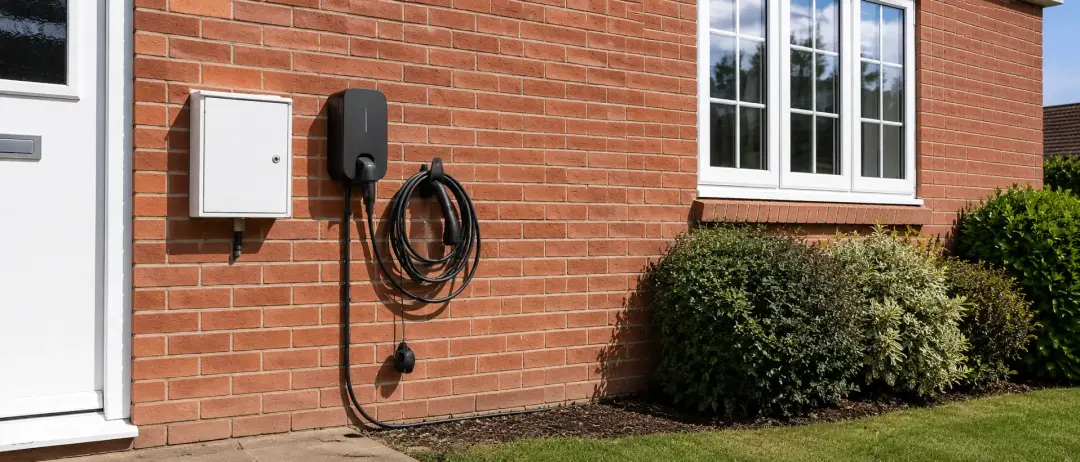
Look at the position you actually use, including how you reverse or drive in and where the car's charging inlet sits. A charger positioned neatly beside the front door may be inconvenient if its cable cannot reach the parked vehicle without crossing a walking route.
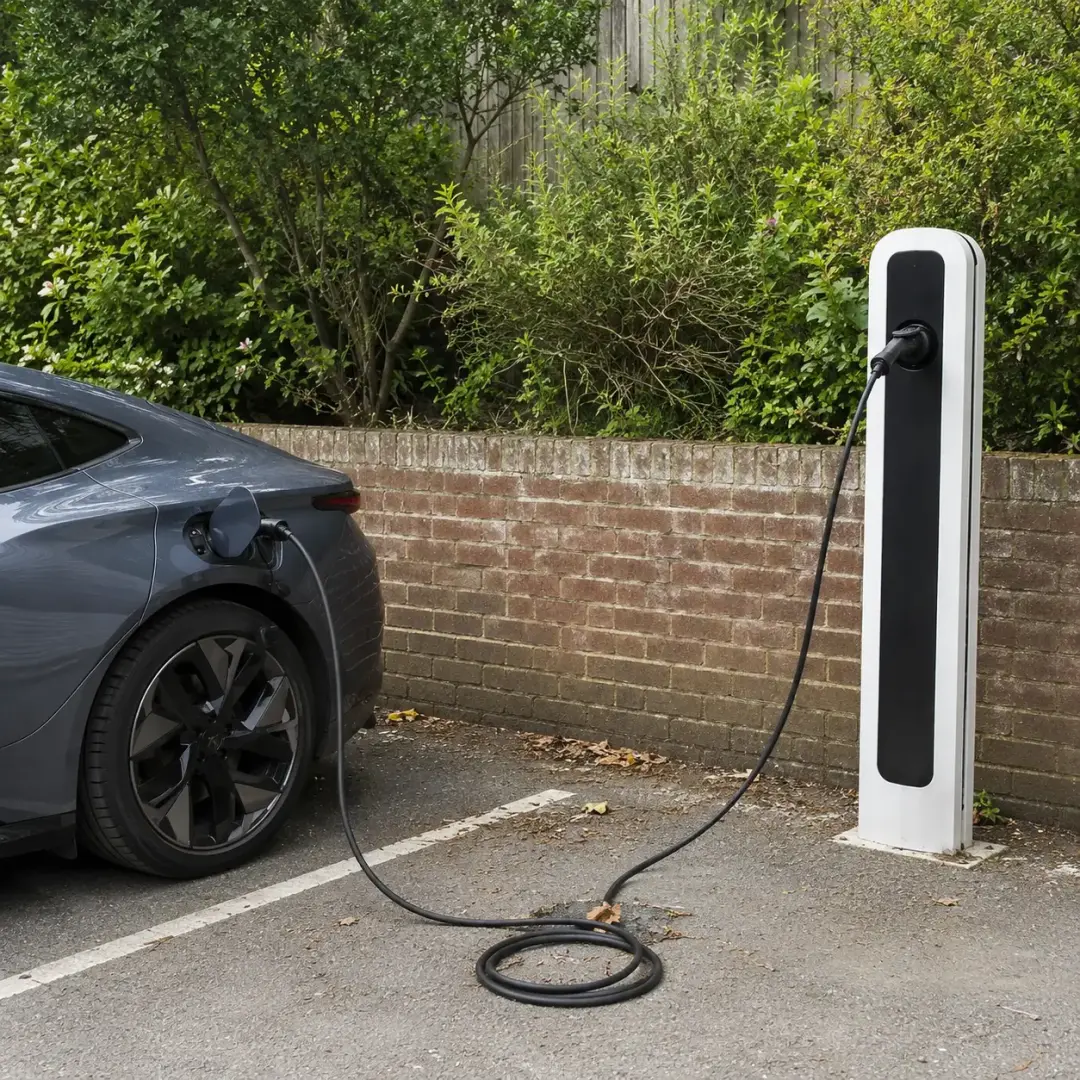
Consider doors, gates, bins and the route taken by visitors. Explain whether the parking space is yours alone or shared. If the vehicle is usually on the street, do not assume a cable laid across the pavement is an acceptable solution. Ask the local authority about authorised arrangements and discuss them with your installer before selecting equipment.
Growing EV ownership makes early planning useful
SMMT's figures published on 5 October 2026 show that 99,201 new battery-electric cars were registered in the UK during September 2026. That is a national registration figure, not evidence that any particular property can support a charger. It makes planning relevant even if your next car has not yet been chosen. Source: SMMT, September 2026 registrations.
If you expect to change cars, explain the likely timing and how the household uses its vehicles. A design should support your needs without assuming every future EV will have the same charging inlet, battery or onboard charging capability. Selecting the location well can be more valuable than buying the highest advertised power rating.
Give the installer a clear view of the property
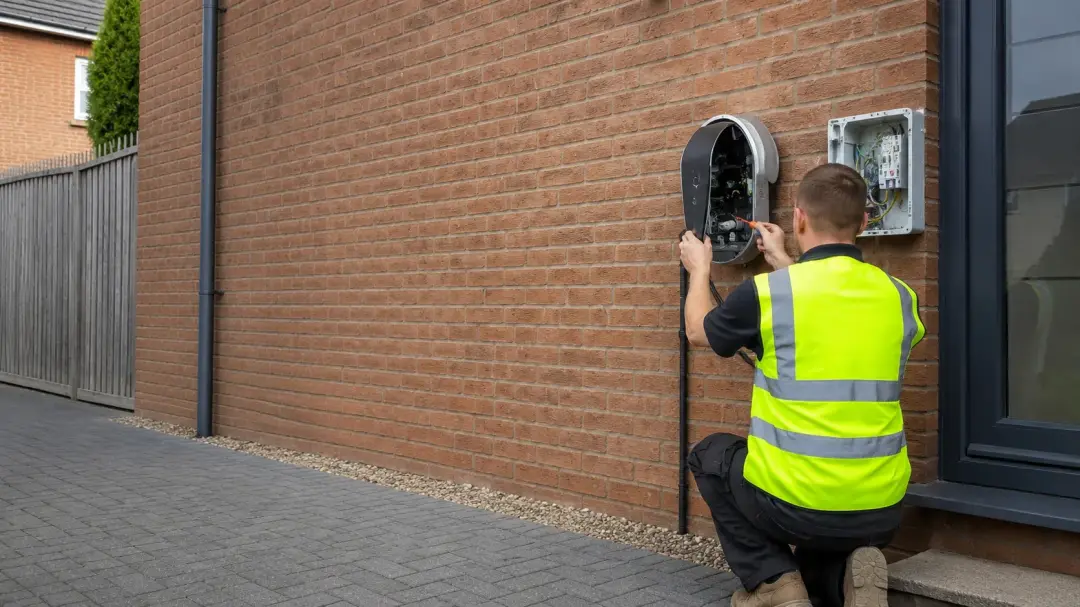
A preliminary assessment may require photographs and information about the consumer unit, meter position, parking space and proposed cable route. Supply only what the installer requests and do not remove electrical covers or seals to obtain pictures. A remote assessment may still need an on-site visit.
Explain obstacles such as a detached garage, long garden route or rooms between the supply and driveway. A survey can distinguish a straightforward route from one needing additional work. NICEIC's EV guidance emphasises professional installation and assessment; the appearance of the driveway alone cannot establish that the electrical design will be suitable. Source: NICEIC EV installation guidance.
Check permissions before choosing the date
A homeowner, tenant and flat owner can have different permissions to obtain. A lease, shared parking arrangement or managed development may require consent even where the charger would be close to your own front door. Ask who owns the wall, space and land through which the cable would pass.
UK Power Networks advises obtaining the building owner's permission for installations in multi-occupied buildings. Confirm the position in writing before committing to work. The grant application, electrical design and property permissions are separate questions: approval under one does not automatically answer the others. If the property is listed or the work affects a sensitive location, establish the relevant planning or consent requirements as well. Source: UK Power Networks.
Match charging capability to your routine
Think about the time the car will normally spend parked and how much energy you typically need to replace. A car used for local journeys and left overnight has different requirements from one that returns briefly between long trips. Share these details rather than choosing solely from a charger's headline rating.
Energy Saving Trust explains that charging speed depends on the chargepoint, vehicle capability and battery. A more powerful unit cannot make the car accept more AC power than its onboard system supports. Ask the installer to explain the expected practical result for your car, including any supply limitations. This helps separate useful capability from a feature that would not improve your everyday charging. Source: Energy Saving Trust.
Make connectivity and handover part of readiness
Check how the proposed charger communicates and which functions depend on an app, account or internet connection. Discuss the available signal at the installation point and how normal charging is started or scheduled. If you want a particular energy tariff, confirm current compatibility before buying either the car or charger.
Ask what you will receive at completion: electrical documentation, instructions, commissioning details and warranty information. Arrange a demonstration so you understand cable storage, scheduling and where to find support. Readiness includes being able to use the equipment confidently, not simply finding space for the box. Keep access details secure and retain the paperwork with the vehicle and household records.
Before requesting an installation quotation
- Identify the parking bay and car inlet position.
- Confirm ownership and any shared access rights.
- Explain the likely cable route and visible obstacles.
- Provide requested information without opening electrical enclosures.
- Describe your daily driving and overnight parking routine.
- Check tariff and connectivity requirements with the relevant providers.
Summary
A suitable home-charging arrangement starts with parking, permissions and a realistic assessment of the installation route and electrical supply. Choosing the equipment comes after those questions, not before them. If you are planning an EV charger in Tonbridge, a clear survey brief helps the installer propose a location and charging setup that work with your property and everyday journeys.