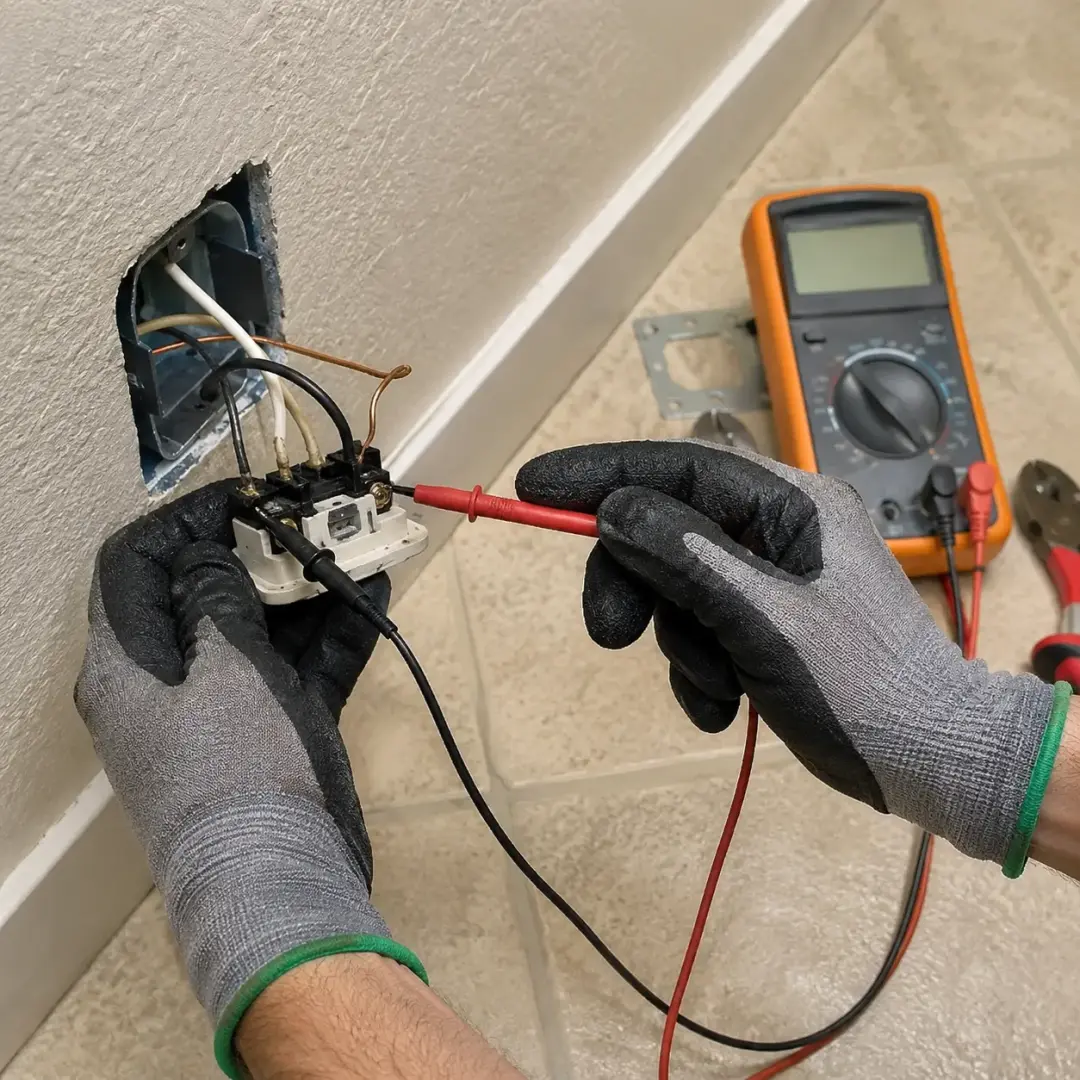

A house rewire can take several days to a week or two, but the meaningful estimate is the programme prepared after your property has been assessed. Electrical installation time is only part of the schedule. Access, occupation, plastering, decoration and testing can all affect when the house is ready to use normally again. Ask what the quoted completion date actually includes.
Why a bedroom count cannot set the timetable
Two three-bedroom houses can present very different jobs. One may have clear floor voids and an empty interior; another may contain fitted wardrobes, tiled floors, several extensions and occupants who need essential rooms kept available. Counting rooms alone cannot capture those differences.
NICEIC gives a broad rewiring indication of a few days to one or two weeks, depending on size and complexity, rather than a guaranteed duration. Treat that as context when planning your first conversation. The contractor's written programme should identify the work, assumptions and dependencies specific to your house. Source: NICEIC rewiring timescale guidance.
Settle the layout before work starts
The initial decisions affect everything that follows. Agree socket positions, lighting controls, fixed appliances and any provision for future equipment before installation begins. A late change to an island unit or fitted wardrobe can alter cable routes and undo completed work.
Mark decisions on a room plan and check them with the people supplying the kitchen, heating and fitted furniture. Ask when the specification becomes fixed and how later changes will be priced. Where other trades are involved, establish who supplies equipment and who confirms its position. A short design meeting can prevent repeated visits caused by incomplete information. The fastest quotation is not necessarily the shortest overall project if important choices remain open.
Access and occupation shape the working day
A contractor working in an empty property can organise access differently from one working around furniture, children, pets or home-working arrangements. Repeatedly clearing rooms and leaving safe access at the end of each day can influence the sequence and working time.
Explain your circumstances before booking. Discuss which rooms will be unavailable, when power interruptions are expected and whether temporary arrangements are appropriate. Do not assume every circuit will be restored each evening: agree what is possible for your particular project. Tell the contractor about essential powered equipment early so a suitable plan can be made. If you intend to stay elsewhere, confirm the dates after the programme is agreed rather than relying on a generic online estimate.
Understand installation stages and other trades
A programme commonly separates cable-route and installation work from the later fitting and finishing activities. The exact sequence depends on the house and the agreed scope. Ask which walls and floors need access, which surfaces will be disturbed and when those areas can be closed.
Distinguish the electrician's making good from plaster finishing and decorating. A quotation may cover one but not the others. If a plasterer is needed between stages, their availability becomes part of the programme. Similarly, fitting decorative lights before ceilings are ready can create avoidable return visits. A written sequence with named responsibilities gives you a more useful completion forecast than an isolated number of electrical working days.
Testing and handover belong in the schedule
A rewire is not complete simply because the new fittings are installed and the lights come on. Allow time for inspection, testing, any necessary correction and the agreed documentation. Ask how electrical certification and any required building-regulations notification will be handled.
GOV.UK's Approved Document P provides England's guidance on electrical safety in dwellings and when notification is required. Agree the compliance route before work starts, rather than trying to arrange it after the project. Source: Approved Document P.
At handover, ask for an explanation of circuit identification and the documentation supplied. Keep a snagging list distinct from unresolved safety or certification work. This makes it easier to understand whether the electrical installation is complete even if decoration continues.
Avoid shortcuts and uncontrolled changes
In its April 2026 national study, the IET reported that 6% of adults had attempted rewiring. This describes reported DIY activity; it is not evidence that rewiring is a suitable household task. A tight moving date should not become a reason to attempt electrical installation work yourself. Source: IET study, 2026.
Ask how the contractor handles unforeseen findings. A concealed obstruction or a change in scope may need a revised programme. Require the explanation and cost to be agreed before additional work proceeds where circumstances permit. A realistic schedule allows proper verification; shortening it by omitting testing or leaving unclear responsibility is not an acceptable saving.
Questions to ask about the proposed programme
- Is the estimate in working days or calendar days?
- Does it include testing and the final return visit?
- Which making-good and decorating activities are excluded?
- What access and room-clearance assumptions apply?
- How will delays or changes be communicated?
- When should I book other trades or arrange accommodation?
Summary
The best answer to how long a rewire takes is a property-specific programme covering decisions, access, installation, testing and finishing. A broad duration helps initial planning, but its assumptions matter more than a promise based only on bedroom count. Settle the specification early and agree responsibilities so the electrical work fits the rest of your renovation.