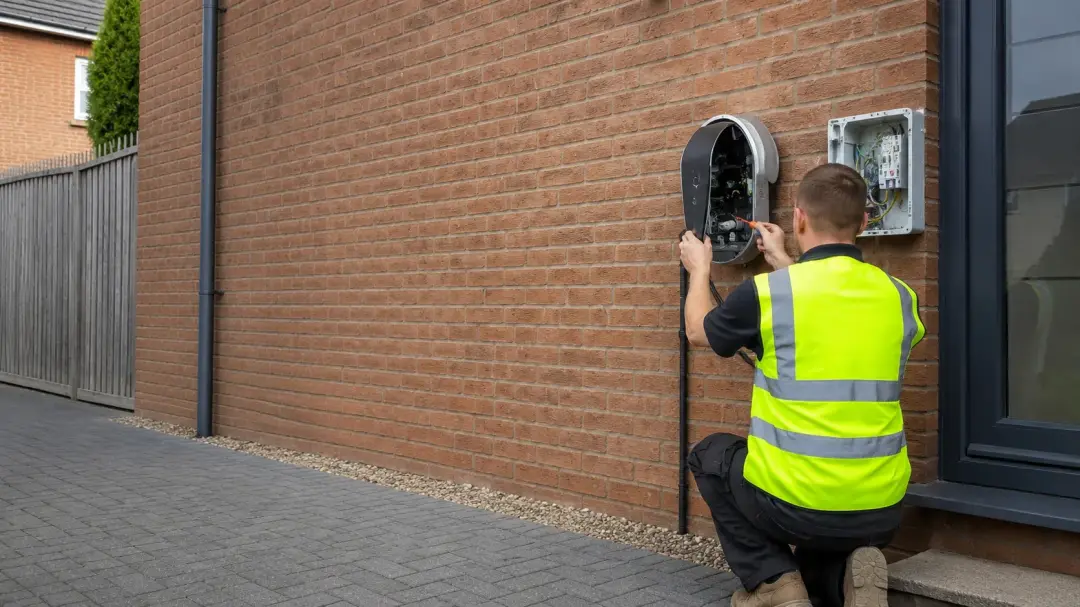
The advertised charger price may cover the unit and a defined installation package, rather than every task your property needs. Additional cable routing, groundworks, electrical remedial work, permissions and connectivity can change the total. The best protection against surprises is a survey-based quotation that states what is included, what is excluded and how any additional work will be agreed.
Find out what the installation package includes
A package described as standard installation is meaningful only when its limits are stated. Ask which cable route, wall construction, installation position and access arrangements the price assumes. Check whether testing, documentation, commissioning and removal of packaging are included.
Compare the same scope across quotations rather than comparing the headline number alone. An installer who identifies a difficult route at survey stage may appear more expensive than an unsurveyed package that later adds the same work. Keep the written specification with the quotation. The Electric Vehicle Consumer Code sets standards for its members' dealings with householders; membership should be checked rather than assumed for any particular installer. Source: Electric Vehicle Consumer Code, updated August 2026.
Cable routes and groundworks can change the job
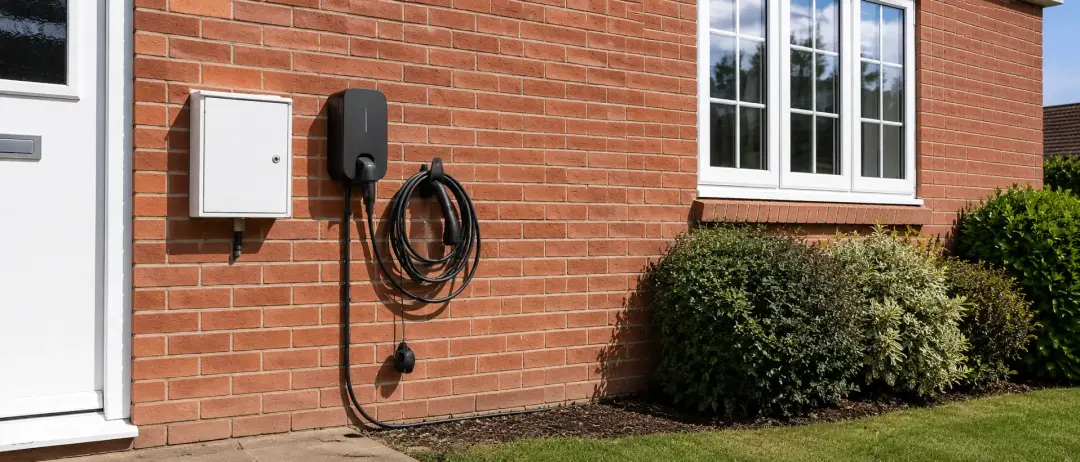
A charger beside the supply point presents a different installation problem from one across a garden or beside a detached garage. The work may involve a longer route, changes in level, suitable containment or excavation. These considerations affect design and labour as well as the amount of cable.
Ask who is responsible for trenching, reinstating surfaces and checking the proposed route. Agree the finish expected after paving or planting has been disturbed. Do not arrange digging independently on the assumption that the electrician can use any trench. The route needs to be agreed before work starts, including any shared land or access requirements. Photographs help explain the layout, but unusual routes may require an on-site survey.
Existing electrical issues are a separate budget item
An assessment may identify work needed before the charger can be connected safely. Ask for this to be itemised separately from the charger itself. A quotation should explain the reason for each proposed change, instead of using a broad label such as electrical upgrade.
Where the incoming network supply needs attention, establish who arranges the work, whether a charge applies and which timescales depend on another organisation. Do not assume network reinforcement rules mean all connection-related work is free. GOV.UK distinguishes customer-specific connection equipment from wider network reinforcement in its explanation of charging arrangements. Source: GOV.UK network connection guidance.
Permissions and the parking arrangement can add work
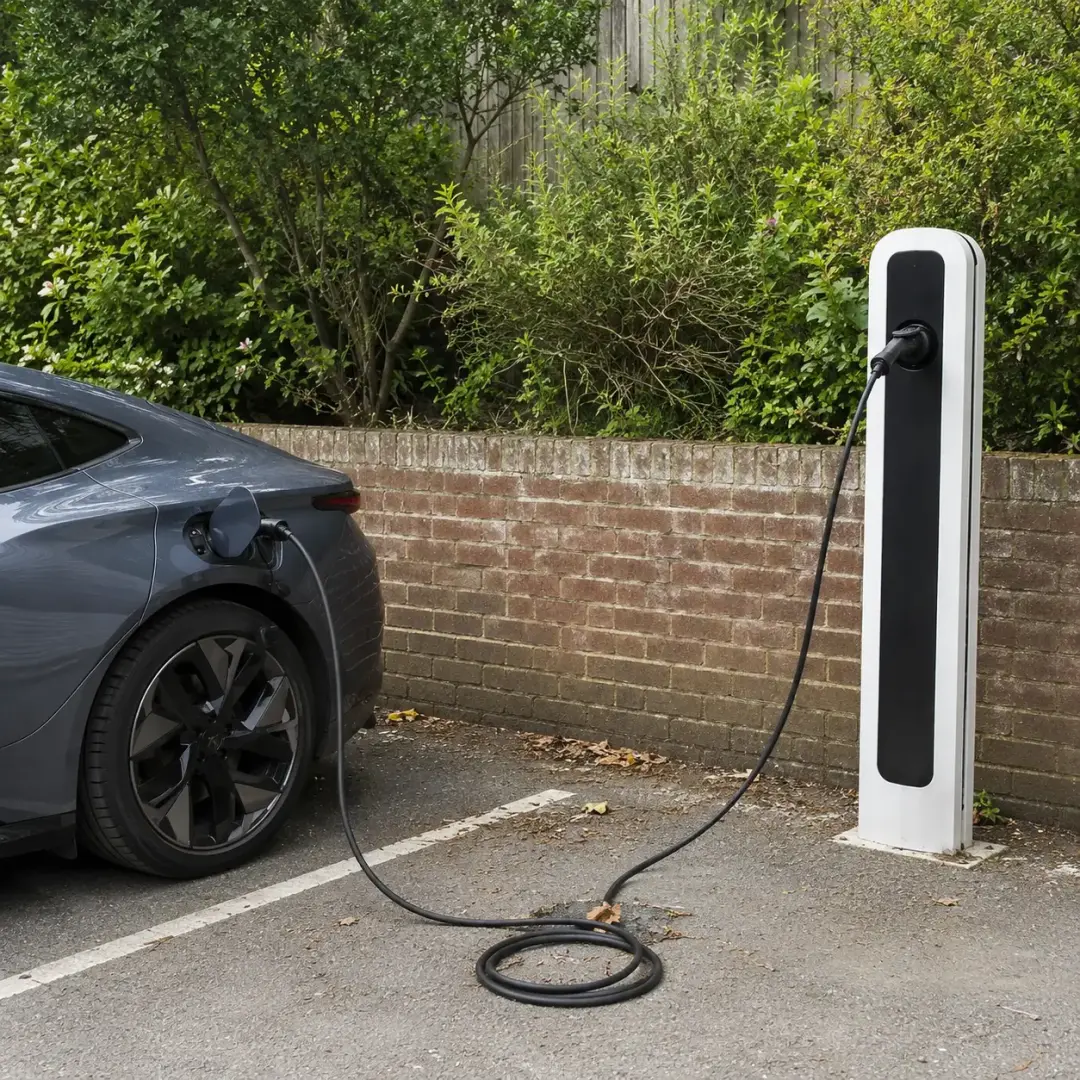
Tenants, flat owners and people using shared parking may need approval before installation. A charger on a communal wall or a cable crossing shared land can introduce administrative and practical requirements that an ordinary driveway package does not cover.
Ask the landlord, freeholder or managing agent what information they require and whether any fees apply. Where only on-street parking is available, establish the local authority's approved approach rather than assuming a cable cover solves the issue. Keep costs for any cross-pavement solution separate from the charger quotation. Confirm approvals before ordering equipment so that an installation cannot proceed only on a location you are not entitled to use.
Check current grants without treating them as guaranteed
As checked on 16 October 2026, GOV.UK lists home chargepoint support of up to £500 for eligible renters and flat owners, and a separate scheme for qualifying households using an approved cross-pavement solution. The current grant portfolio is available until 31 March 2027. These are conditional funding limits, not discounts available to every homeowner. Source: GOV.UK chargepoint grants, updated April 2026.
The Department for Transport reported that the renters and flat owners chargepoint grant had funded 26,504 sockets by 1 July 2026, including 9,301 in the preceding twelve months. These figures count grant-supported installations, not all home chargers, and recent grant data can be provisional. They show that support is being used, without establishing your own eligibility. Source: DfT grant statistics, published 27 August 2026.
Ask which scheme, if any, applies to your circumstances and whether the proposed installer and equipment meet its requirements. Confirm the application process before work begins. Do not deduct funding from your budget until the relevant conditions and approval arrangements are clear. A grant for buying an electric car is different from support for installing its charger.
Budget for running costs and connected features
Compare electricity tariffs using your wider household consumption, not just the cheapest charging period. A low overnight rate may sit alongside different daytime prices or standing charges. Charger compatibility, vehicle compatibility and the tariff's current terms should be checked directly with the provider.
Consider app subscriptions, optional connectivity services and any extended warranty separately from electricity. Ask whether basic charging relies on a paid feature and what happens if you change supplier. For an illustrative calculation, 20 kWh delivered at 10p per kWh costs £2, whereas the same amount at 30p costs £6. Those are assumed rates, not current tariff quotations, and real use also reflects charging losses and household circumstances.
Use an itemised comparison before booking
- Charger model, warranty and included accessories.
- Cable-route assumptions and any length allowance.
- Groundworks, reinstatement and property permissions.
- Required electrical work and external appointments.
- Testing, commissioning and completion documents.
- Conditional grant deductions and optional ongoing fees.
Summary
A charger installation is easier to budget for when the quotation describes the whole job. Route complexity, existing electrics, permissions and connected services can matter as much as the unit price. Before installing in Tonbridge, compare itemised proposals and clarify funding conditions. A transparent scope lets you make a decision without relying on an advertised package that does not match your property.