Choose lighting according to the activity, surfaces and people in each room. Kitchens need useful light on working areas, bedrooms need comfortable evening and reading options, and bathrooms need fittings appropriate to their location. Compare brightness, colour and glare before buying. Matching products throughout a home matters less than making each space comfortable and practical to use.
Room-by-room lighting choices in Tonbridge
Start by distinguishing brightness from power consumption. Lumens describe light output, while watts describe electrical power. A familiar wattage from an old incandescent bulb is therefore a poor way to choose a modern LED. Look at the shade or luminaire too: an opaque enclosure can direct the available light very differently from a clear or diffusing one.
Energy Saving Trust’s October 2026 guidance gives around 800 lumens as the LED equivalent of a traditional 60-watt bulb and identifies a colour rendering index of 80 or above as suitable for most household tasks. These are selection references, not whole-room design targets. You still need to consider how light reaches the surfaces you use. Compare the lighting figures.
Kitchens: put working surfaces first
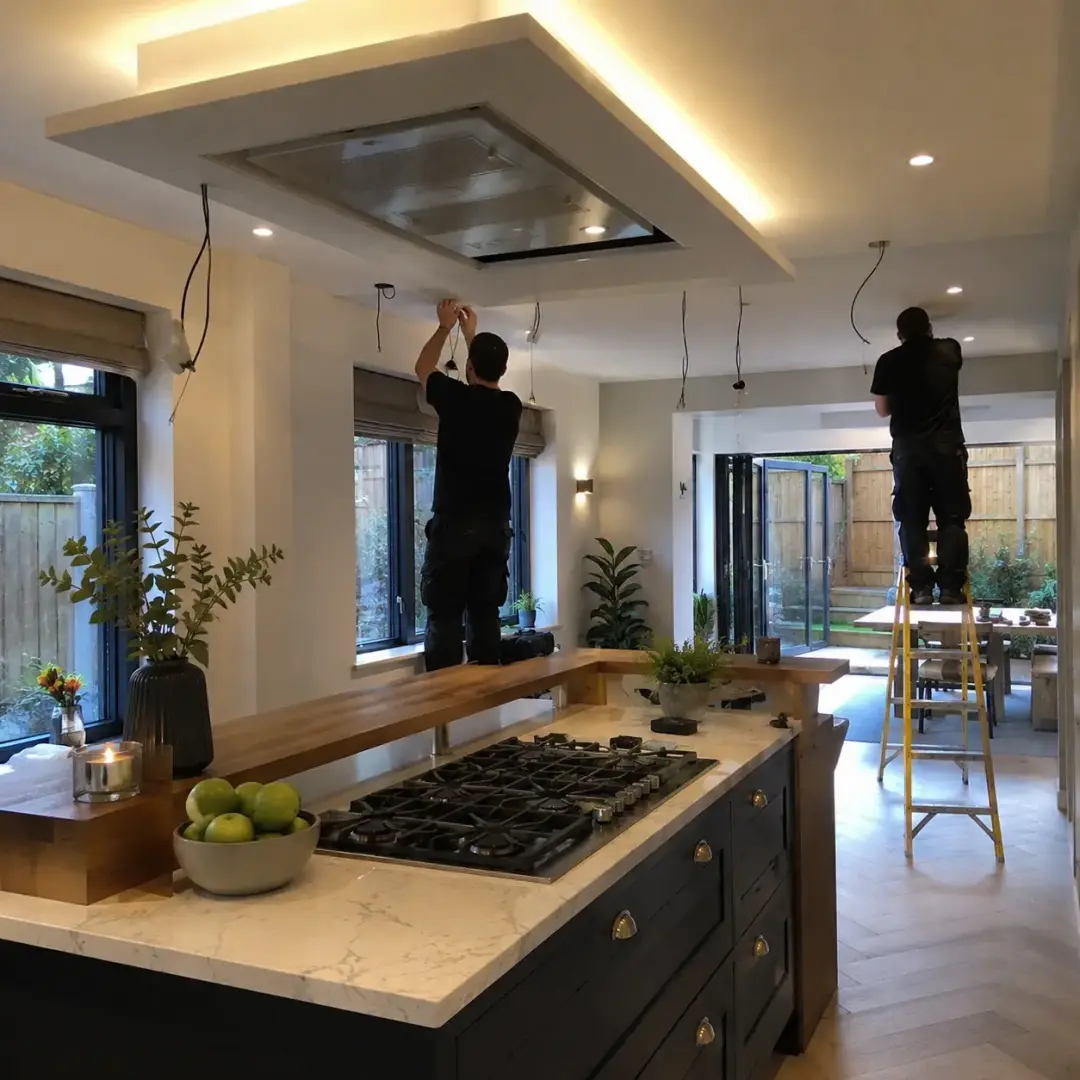
Check where your body will be when preparing food. A ceiling fitting behind you may leave the worktop in shadow, even though the room looks bright from the doorway. Under-cabinet or other appropriately positioned task lighting can illuminate the working area more directly. Coordinate it with cabinet heights, splashbacks and the locations of sinks and cooking equipment.
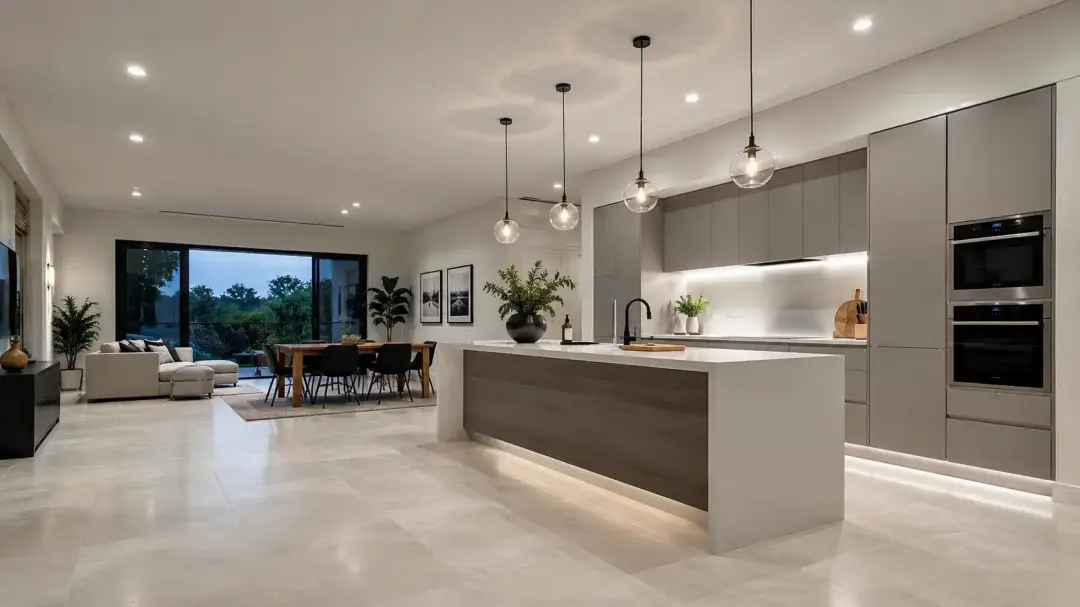
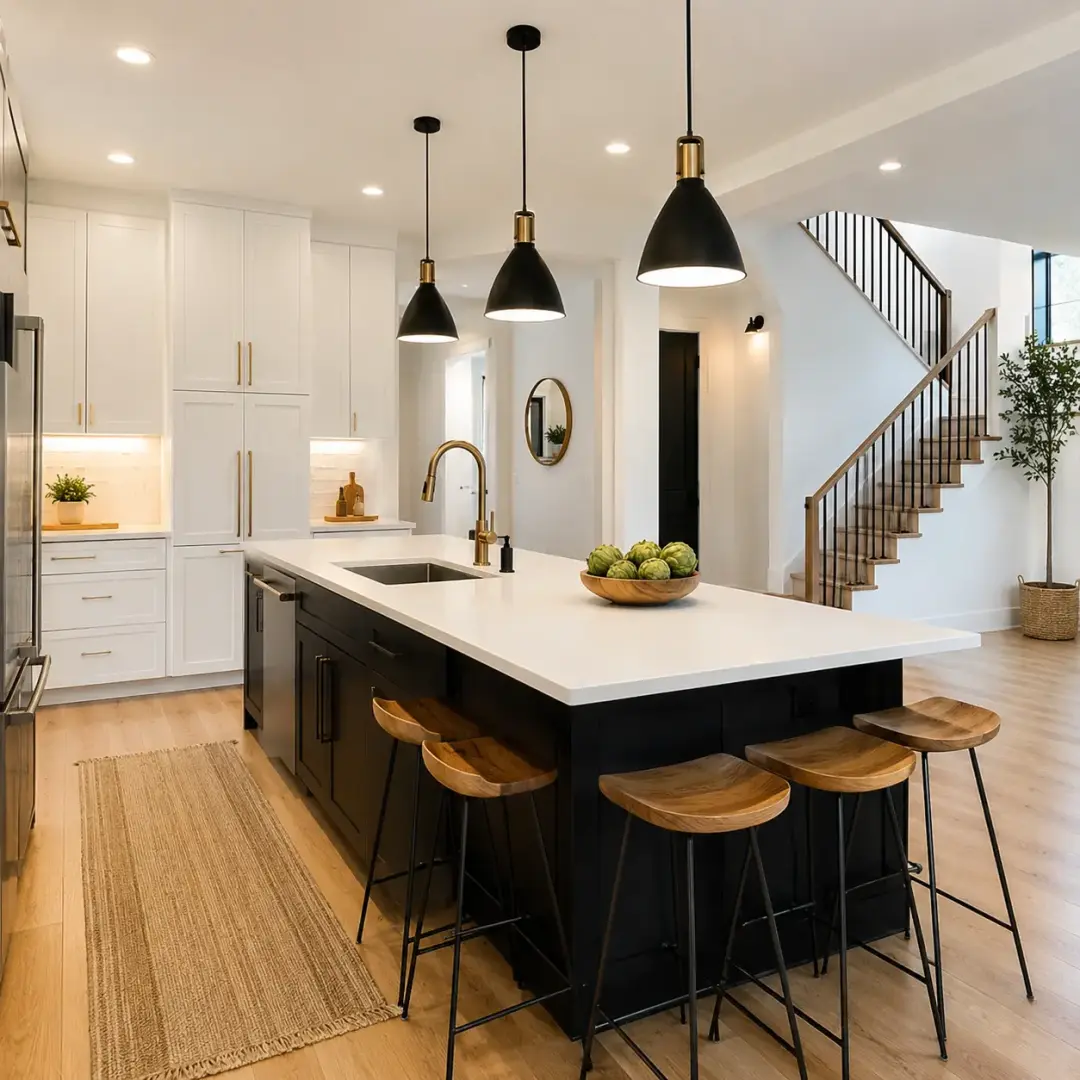
Use pendants over islands for the role they actually perform, checking the beam and shade before assuming they replace task lighting. Consider reflections in polished stone, glass and shiny cabinet doors. Separate the preparation lighting from decorative and dining groups so an evening meal does not require the full working arrangement. Agree the final position against the installed or accurately drawn furniture, particularly when the island is offset within an open room.
Living rooms: reduce glare from seated positions
Look at the room from the sofa, not just while standing under the ceiling light. An exposed bright source can feel uncomfortable when it sits in your normal line of sight. Lamps, wall lighting and controlled accent light can support reading or conversation without requiring the same brightness across every part of the room.
Check television reflections and the contrast between the screen and its surroundings. For reading, position the source so it reaches the page without shining directly into the reader’s eyes. Make lamps practical by providing suitable socket positions, avoiding trailing leads across walking routes. If the furniture is likely to move, discuss a flexible arrangement rather than tying every activity to one permanent spotlight position.
Practical next steps
- Choose output and distribution rather than wattage alone.
- Review glare and shadows from normal seated and working positions.
- Check bathroom suitability with the installer before buying fittings.
Bedrooms and home offices need different options
Bedside lighting should let one person read without unnecessarily lighting the whole bed. Check switch reach from the actual bed position and allow for headboard width and bedside furniture. A separate general light remains useful for cleaning and getting dressed, while wardrobe interiors or mirrors may need more focused illumination.
A bedroom used for work needs an additional review of the desk and screen. Avoid placing a bright lamp where it reflects in the monitor or causes a strong shadow across writing. The colour and level that feel comfortable for a late evening may differ from what you prefer for detailed daytime tasks. Test samples where possible and ensure the controls make changing between those uses straightforward.
Bathrooms: location determines fitting suitability
Bathroom lighting must be selected for the actual position and conditions. Tell the electrician about the bath, shower, ceiling height and ventilation before ordering fittings. Different locations can have different requirements, and a general label such as bathroom light is not enough to specify every installation detail.
At a mirror, think about shadows on the face and reflected glare as well as overall brightness. A fitting directly overhead may not give the most useful view for shaving or applying makeup. In its April 2026 survey, the IET found that 18.7% of respondents had undertaken more advanced electrical work such as installing new lighting. That reported behaviour does not establish competence: use a qualified electrician for fixed wiring alterations. See the IET findings.
Hallways and stairs: make movement easy
A hallway needs usable light where people enter, find keys and move between rooms. On stairs, consider whether treads and changes in level remain clear when someone is walking in either direction. Suitable controls at the places people enter and leave reduce the temptation to cross the area in darkness.
Sensors can help in some circulation spaces, but consider detection coverage, time settings and whether the light could go out while someone is still using the area. Keep any low-level night lighting distinct from the main arrangement. Discuss domestic electrical services if existing switching needs changing, or installation work for new points. Finish by checking the complete route after dark rather than judging each fitting in isolation.
Where people have different visual needs, try the proposed light level together before committing to identical lamps in every fitting throughout the home.
Summary
The right light depends on what happens in the room and where people need to see clearly. Worktop shadows, television glare, bedside reach and bathroom conditions all deserve different solutions. Ask Tonbridge Electrical Testing to help coordinate suitable fittings and controls for the rooms you want to improve.